I've made a deliberate choice: Expedition Kilimanjaro uses the Machame Route exclusively. Not because it's easier (it's not), not because it's cheaper (it's actually more expensive than some alternatives), but because it offers the best combination of acclimatization, scenery, and summit success rates.
This isn't marketing spin. It's a decision based on thousands of climbers, hundreds of expeditions, and real data about what actually gets people to Uhuru Peak safely. Let me explain why.
The Kilimanjaro Route Landscape
There are seven main routes to the summit of Kilimanjaro. Each has advocates who claim theirs is "the best." But when you look at what actually matters – acclimatization profile, success rates, and overall experience – the Machame Route stands out.
Here's how the main routes compare:
| Route | Days | Difficulty | Success Rate | Scenery |
|---|---|---|---|---|
| Machame | 6-7 days | Moderate-Hard | 85-90% | Excellent |
| Marangu | 5-6 days | Moderate | 65-70% | Good |
| Lemosho | 7-8 days | Moderate-Hard | 85-90% | Excellent |
| Rongai | 6-7 days | Moderate | 75-80% | Good |
| Umbwe | 6-7 days | Very Hard | 60-70% | Good |
The Machame Route offers high success rates (comparable to the longer Lemosho) while being more efficient with time. It's harder than Marangu or Rongai, yes – but that difficulty serves a purpose.
The Acclimatization Advantage
This is the single most important factor for summit success, and where Machame truly excels. The route's design follows the mountaineering principle: "Climb high, sleep low."
How Machame's Profile Works:
Gentle introduction through rainforest. Gradual elevation gain sets baseline for acclimatization. Your body begins adapting to reduced oxygen.
Emerge from forest into moorland. Moderate elevation gain continues building adaptation. Scenic Shira Plateau opens up.
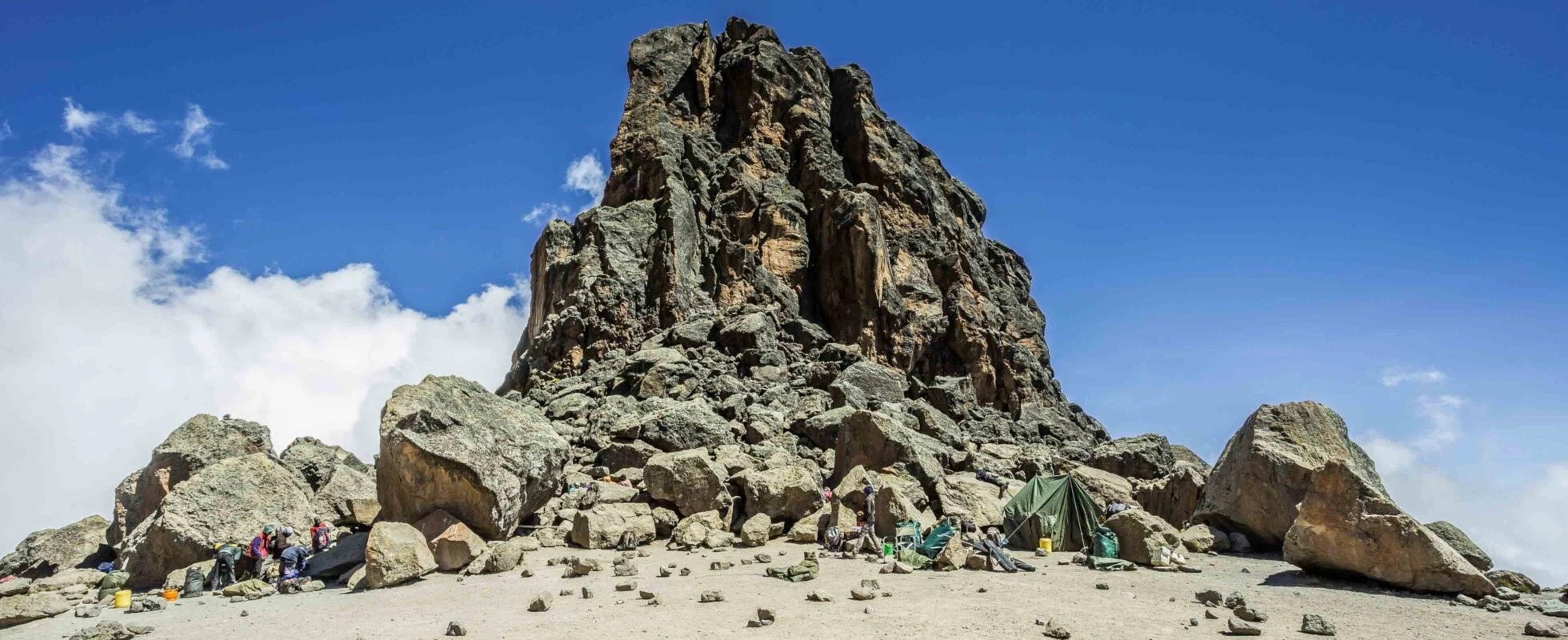
The critical acclimatization day. You climb to 4,630m at Lava Tower (higher than Mont Blanc), then descend to sleep at 3,976m. This "climb high, sleep low" profile is the secret to Machame's success. Your body adapts to altitude during the day, then recovers at lower elevation overnight.
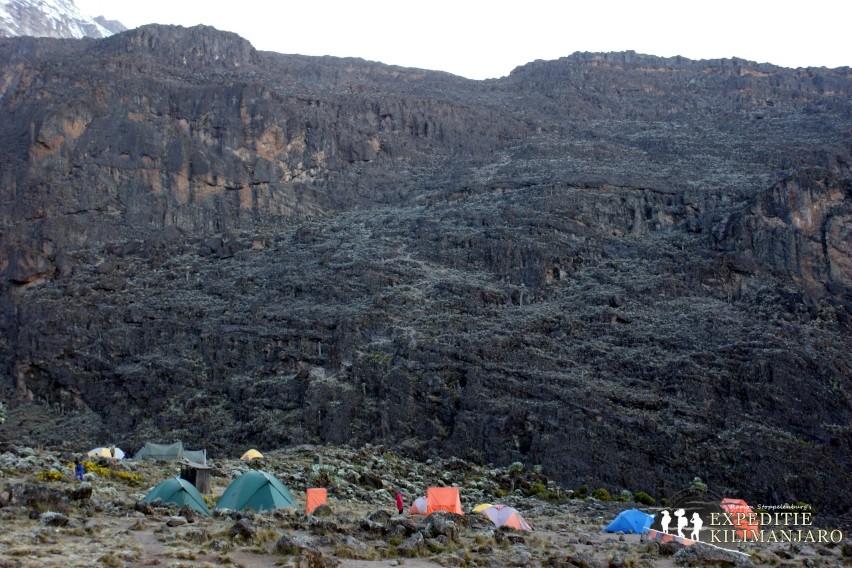
Short day with minimal elevation gain, but includes the thrilling Barranco Wall climb. Another opportunity for your body to consolidate acclimatization gains from Day 3.
Climb to high camp. Arrives early afternoon, giving time for rest before midnight summit push. Your body has now spent 5 days adapting.
Summit day. Midnight departure, reach Uhuru at sunrise, descend all the way to below 4,000m. Long, demanding day – but your acclimatization preparation makes it achievable.
Final descent through forest. Celebration at the gate with summit certificates.
✓ Why This Profile Works
By Day 6, your body has experienced altitudes up to 4,630m (Day 3), consolidated that adaptation over Days 4-5, and is physiologically prepared for the final push to 5,895m. This is why Machame's 7-day itinerary has such high success rates despite being shorter than some alternatives.
Comparing Machame to Other Popular Routes
Machame vs. Marangu (The "Coca-Cola Route")
Marangu is often marketed as the "easier" route. It has hut accommodation instead of camping, and the trail is less steep. But easier doesn't mean better for summiting.
Why Marangu has lower success rates:
- Poor acclimatization profile: Marangu's ascent is more direct. Less "climb high, sleep low."
- Same path up and down: Less scenic variety, and psychologically harder to descend the same route.
- 5-day option too fast: Many tour companies offer 5-day Marangu. This is too fast for most climbers. Success rates on 5-day Marangu are only 50-60%.
- Hut accommodation: Sounds nice, but means you're packed in with many people. More noise, less rest, higher disease transmission.
When Marangu makes sense: If you absolutely cannot do camping, or if weather conditions make camping dangerous (rare). Otherwise, Machame is the better choice.
Machame vs. Lemosho
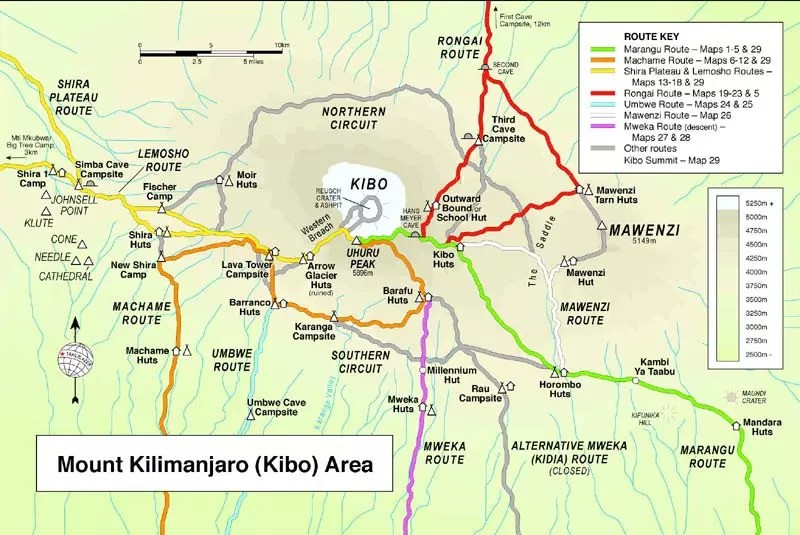
Lemosho is Machame's closest competitor in terms of success rates and experience quality. In fact, Lemosho and Machame share the same route from Day 3 onward – they just approach from different sides.
Lemosho advantages:
- More gradual start (begins at 2,100m vs. Machame's 1,800m)
- Less crowded on Days 1-2
- Arguably more scenic approach through remote western side
- 8-day option allows even more acclimatization time
Why we still choose Machame:
- Time efficiency: 7 days vs. 8 days for comparable acclimatization
- Cost: Lemosho requires longer logistics, more park fees, higher overall cost
- Success rates are equivalent: Both achieve 85-90% when done properly
- The approach difference is minimal: You get nearly identical scenery from Day 3 onward
Honest assessment: If you have the extra day and budget, Lemosho is excellent. But Machame delivers the same summit success in less time and at lower cost.
Machame vs. Rongai
Rongai approaches from the north (Kenya side), making it drier and less crowded. Some tour operators market it as "easier" than Machame.
Rongai's disadvantages:
- Inferior acclimatization: More gradual, steady ascent. Lacks Machame's "climb high, sleep low" profile.
- Less scenic: Northern approach is drier, fewer ecological zones
- Lower success rates: 75-80% vs. Machame's 85-90%
- "Easy" is misleading: You still have to summit from the same high camp. The final push is identical.
When Rongai makes sense: During heavy rains (March-May), when southern routes are muddier. Otherwise, Machame is superior.
Machame vs. Umbwe
Umbwe is the most direct, steepest route. It's marketed to experienced climbers who want a challenge.
Why we don't offer Umbwe:
- Poor acclimatization: Ascends too quickly for most people
- Lower success rates: Only 60-70% summit
- "Difficult" for wrong reasons: It's hard because your body can't adapt fast enough, not because it requires technical skills
- Higher altitude sickness rates: More climbers experience severe symptoms
Umbwe eventually merges with Machame Route anyway. Why start with inferior acclimatization?
The Scenic Diversity of Machame
Beyond acclimatization, Machame offers the most diverse and spectacular scenery of any Kilimanjaro route. Over 7 days, you experience:
- Montane Rainforest (Day 1): Lush, green, moss-covered trees, unique flora
- Moorland (Day 2): Giant heathers, otherworldly landscape
- Shira Plateau (Day 2-3): Expansive volcanic plateau with views of Kibo
- Alpine Desert (Days 3-5): Stark, beautiful, moonlike terrain
- Glaciers (Summit Day): Ice formations near Uhuru Peak
You see all five of Kilimanjaro's ecological zones. Compare this to Marangu or Rongai, where you largely stay in similar vegetation zones until high camp.
The Challenge Factor: Why Harder Can Be Better
Machame is physically more demanding than Marangu or Rongai. Steeper sections, longer days, camping instead of huts. Some see this as a disadvantage. I see it as an advantage.
Why moderate difficulty helps:
- Better pace control: Steep sections force slower movement = better for altitude
- Physical engagement: Your body is working, which stimulates acclimatization adaptations
- Mental preparation: You build confidence day by day. Each challenge overcome builds belief in your ability to summit.
- Barranco Wall: The one "scrambling" section (not technical, but requires hands). This is actually a mental boost – it's exciting, memorable, and achievable.
Routes that are "too easy" can actually hurt summit attempts. Climbers arrive at high camp without having been truly tested. Then summit night hits – and it's harder than anything they've experienced. On Machame, you've been building to this moment progressively.
⚠️ About the Barranco Wall
This section intimidates some climbers before the trip. Don't worry. It's:
- Not technical climbing – it's scrambling (using hands for balance)
- Short – about 45-60 minutes
- Very safe – guides assist, there's no exposure
- Actually fun – most climbers say it's a highlight
If you can climb a ladder, you can do the Barranco Wall.
The 7-Day vs. 6-Day Machame Debate
Machame can be done in 6 or 7 days. Some operators offer the 6-day version to save cost and time. We only offer the 7-day version.
Why 7 days matters:
- Success rates: 7-day Machame: 85-90%. 6-day Machame: 70-75%.
- The difference is Day 4: 6-day skips the Karanga Camp stop, going directly from Barranco (3,976m) to Barafu (4,673m). That's a 697m ascent in one day after you've just done the "climb high, sleep low" Day 3.
- Your body needs consolidation time: Day 4's short day allows acclimatization gains to solidify
- Rest before summit push: You arrive at Barafu less exhausted, better prepared for summit night
One extra day costs more, yes. But it increases your summit chances by 15-20 percentage points. That's a huge difference.
💡 Our Recommendation
If tour operators are offering different route options, ask yourself:
- What's the success rate for this specific route/duration?
- How does the acclimatization profile work?
- Why are they recommending this route vs. others?
Cheaper isn't better if it means lower summit chances. The goal is to reach Uhuru Peak, not to save $200 and turn back at 5,600 meters.
The Bottom Line: Why Machame Works
After 17 years of organizing expeditions, I've chosen Machame exclusively because:
- Acclimatization profile is scientifically sound – "climb high, sleep low" on Day 3 is proven
- Success rates are among the highest – 85-90% when done as 7-day itinerary
- Scenic diversity is unmatched – all five ecological zones
- Challenge level is appropriate – hard enough to build confidence, not so hard it's dangerous
- Time efficiency is optimal – 7 days is the sweet spot for most climbers
- Our guides know it intimately – 17 years of experience on this specific route
Could other routes work? Yes. Lemosho is excellent if you have 8 days. Rongai works during heavy rains. But for the vast majority of climbers, the 7-day Machame Route offers the best path to summit success.
This isn't about limiting options – it's about focusing on what actually works. I'd rather do one route exceptionally well than offer multiple routes with varying success rates.
✓ What This Means for You
When you book with Expedition Kilimanjaro, you're getting:
- A route proven over thousands of climbs
- Guides with 17 years of Machame-specific experience
- The 7-day itinerary with optimal acclimatization
- 85-90% summit success rate
- The most scenic and diverse Kilimanjaro experience